


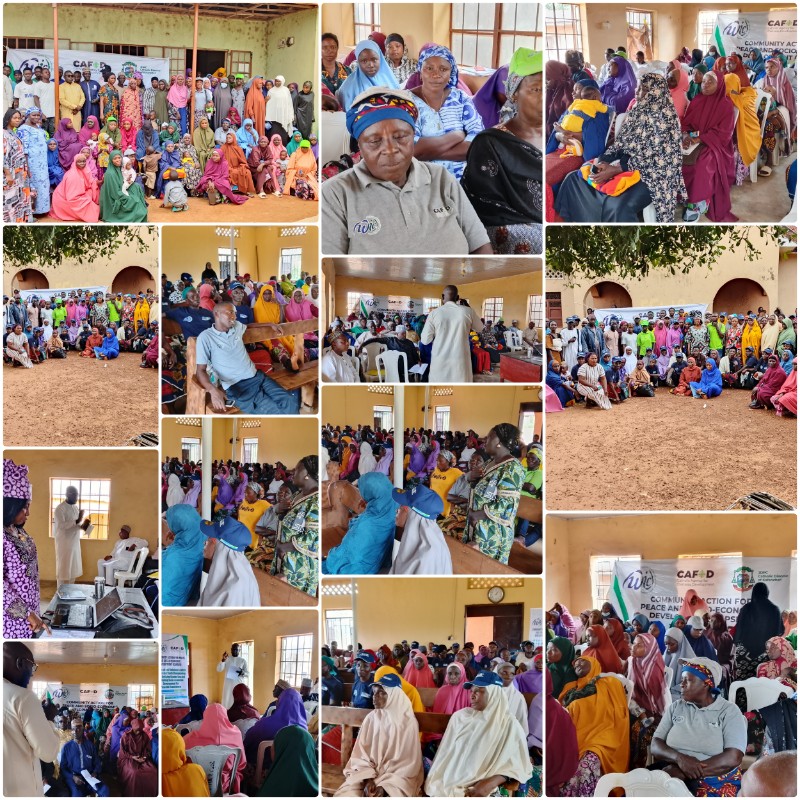
NEWSDAILYNIGERIA: The Women’s Interfaith Council (WIC), in collaboration with JDPC Kafanchan Diocese, with support from CAFOD, has embarked on trauma counseling and psychosocial health interventions in the Jema’a and Zangon Kataf Local Government Areas of Kaduna State, Nigeria.
The program, held from October 6 to 7, 2026, in Zangon Kataf and Jema’a LGAs respectively, attracted women, children, and youth groups from within the local governments.
Speaking on the essence of the intervention, the Programme Manager for the Women’s Interfaith Council (WIC) under the Community Action for Socio-Economic Development (CAPSED) Project, Juliet Chinyere Peter-Simon, stated:, ” We are here because conflicts and violence in Jema’a and Zangon Kataf LGAs have affected the emotional and psychological well-being of community members, particularly women, youth, and children. Through the CAPSED project—implemented by WIC in partnership with JDPC Kafanchan and supported by CAFOD—we conducted trauma counseling and psychosocial support to help affected people understand their experiences, develop healthy coping strategies, and rebuild hope and resilience.
”We conducted the activities on October 6 in Goska, Jema’a LGA, covering the Goska, Ambam, Dangoma, and Laddewodo communities, and on October 7 in Zango Urban, Zangon Kataf LGA, covering the Zango Urban and Kurmi Masara communities. The sessions focused on understanding trauma, recognizing emotional distress, coping strategies, resilience, and available support services.”
According to her, WIC is encouraged by the opportunity to bring this support closer to the communities. Their next steps are to document the results, identify participants who may need further assistance, and link them to appropriate psychosocial services. They also plan to monitor and document the total number of beneficiaries reached
.
”I am impressed with the level of community engagement and the opportunity to bring trauma counseling and psychosocial support closer to the people who need it,” she added. “I am encouraged that the sessions provided a platform for community members to learn about trauma, coping strategies, and emotional well-being.
”We believe this is an important step toward healing, rebuilding hope, and strengthening resilience in our communities. With continued support, proper referrals, and follow-up, we can help sustain the impact beyond the project activities.”
Earlier, a mental health professional, psychiatric social worker, and Assistant Director at the Federal Neuro-Psychiatric Hospital Barnawa, Kaduna, Dr. (Mrs.) Joyce Ahemen Iorver, reflecting on her passion for attending to vulnerable people, especially the mentally distressed, stated:
”We are here today to provide trauma counseling and psychosocial support to individuals who have been victims of conflicts, loss, disasters, and other distressing experiences.
”Specifically, we want to, through our program today, increase our participants’ understanding of trauma and its diverse effects, ranging from emotional, cognitive, social, behavioral, and physical. We also intend to strengthen positive mechanisms for managing stress, grief, and challenging experiences. We further intend to promote resilience, hope, and emotional well-being, as well as identify participants who may require further support and recommend appropriate interventions.”
Expressing satisfaction with the outcome of the program, she noted:
”First of all, I want to commend the sponsors for their initiative. I am also impressed with the turnout of the participants, their enthusiasm, their participation, and their willingness to share their life experiences and supportive storytelling—aimed at helping other participants know how they coped when they were in distress—thereby sharing their coping strategies with others.”
According to her:” the participation of individuals from both communities was impressive. They shared their experiences and expressed their willingness to stay together, as is promoted by the organization. Furthermore, it enabled them to share coping capabilities and learn that their experiences were not peculiar to them. They were happy to learn how to further navigate their lives after distressing experiences.
”To me, a major highlight was when participants expressed themselves and their challenges and requested ways of sustaining the program for posterity.
”You may recall, or may have read in history books, that in ancient African society, people who suffered from unfortunate conditions were taken care of by family members. Our norms and values required that each person be his brother’s keeper. This was informed by close relationships based on kinship that existed among the people.
”However, with advancements in society due to technology, industrialization, and urbanization, relatives no longer live together as in early societies, thereby necessitating social support by other members of the society. This program has graciously provided that platform and is highly appreciated.”she added.